
We’re living in a world that is perpetually bathed in artificial light. We repel the dark. And yet, we live in the midst of what is often referred to as “dark times.” How can we be present and engaged in these dark times? What are we forgoing as we trade the ancient curiosity evoked by the night sky for the ceaseless illumination of artificial light?
How can gazing upon the night sky connect us to a greater sense of space, beauty, and possibility? Are we able to come into a relationship with something infinitely bigger than ourselves? In five steps, this practice invites you to immerse yourself in nightfall and welcome the night as a window into mystery and awe.
One
With dusk approaching, seek the quiet company of the coming dark. Be attentive to the direction of the setting sun, remembering that the light of this star has made your life possible. If you’re in an urban area without a view of the horizon, you may be able to see the descent of the sun — and the accompanying shifts of light and shadow — reflected by neighboring buildings or cast onto the ground in front of you. As the sky transitions from blue to orange to black, find the darkest place you can — whether a hilltop in the countryside, a corner of your backyard, or the side of your street with the fewest lights. Whether you are outdoors or indoors looking through a window, turn off all the lights that you can, including your phone. Notice what is transforming around you as night descends — sounds, colors, and textures, both in the sky above and here in your corner of the Earth.
Two
As night spreads across the dome of the sky, turn your attention upward. Perhaps the bright shape of the moon is already climbing higher. What does it look like tonight? Depending on the time of year and your hemisphere, you may see the red face of Mars or the cold blue eye of Venus blinking at you from our solar system. The very first stars will begin to appear where the sky is darkest, far above the band of light that still lines the horizon. As you see each glimmer of silver light appear above, remember that these ancient photons have traveled unfathomable distances to reach your eyes. If there is too much ambient light where you are to see any celestial bodies above you, close your eyes and summon them in your mind. Remember that, even if you cannot see them, they are there above you, always.
Three
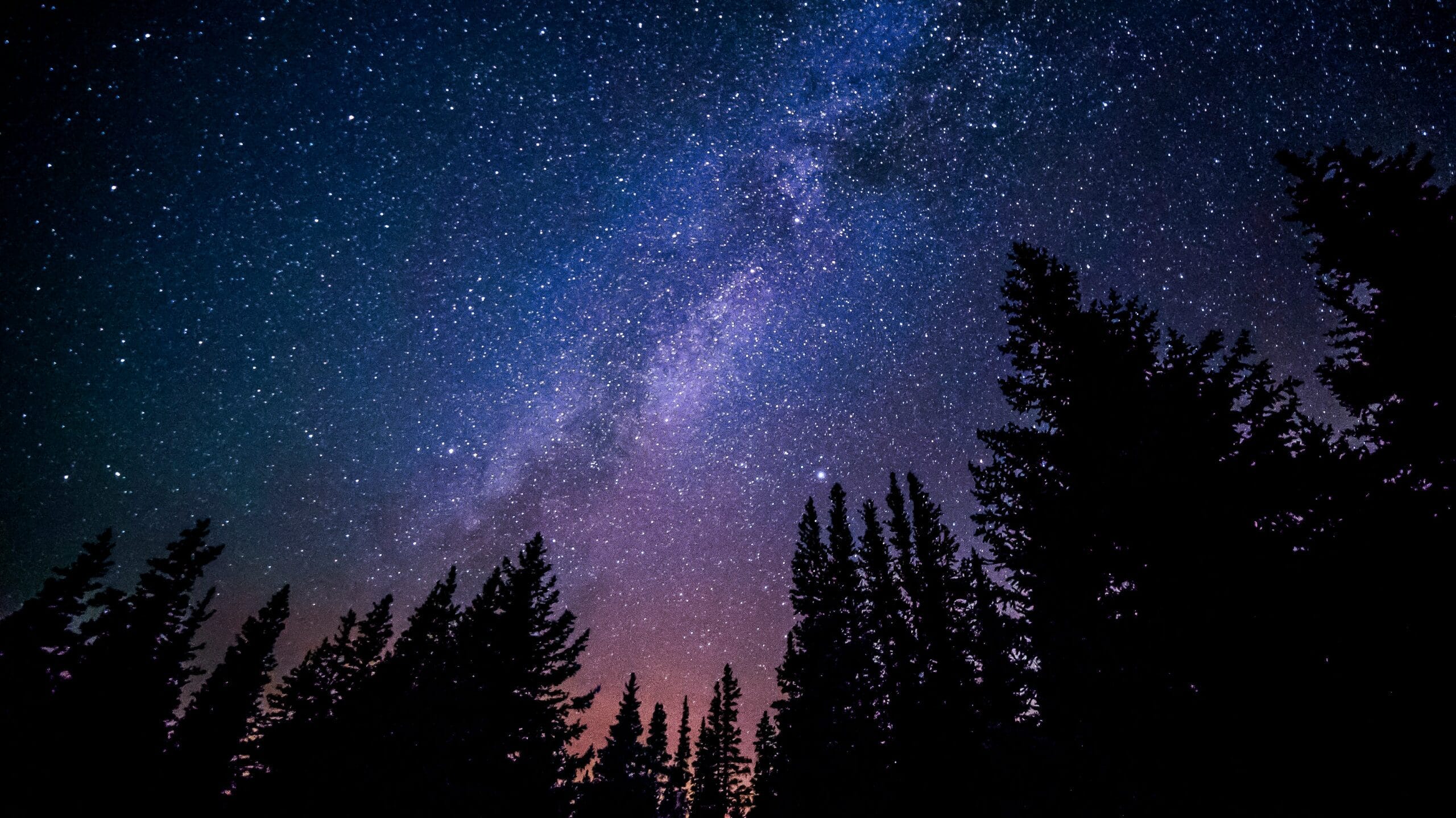
As the darkness progresses, look at the hazy band of stars, dust, and gas that make up the Milky Way — the “barred spiral” galaxy that we call home. As the Milky Way rotates, our sun and solar system are traveling with it at 515,000 miles per hour. Look up into the sky and think about how — day or night, inside or outside — you are spinning in concert with the light of the two hundred billion stars that make up our galaxy.
Four
We are often taught to fear the absence of light; to shy away from the dark as something oppressive or constrictive. But in the night sky, darkness is an invitation into expansive mystery. As the spot where you are sitting rotates further away from the sun, stay with the dark for as long as you are able — just be with the dark.
Five
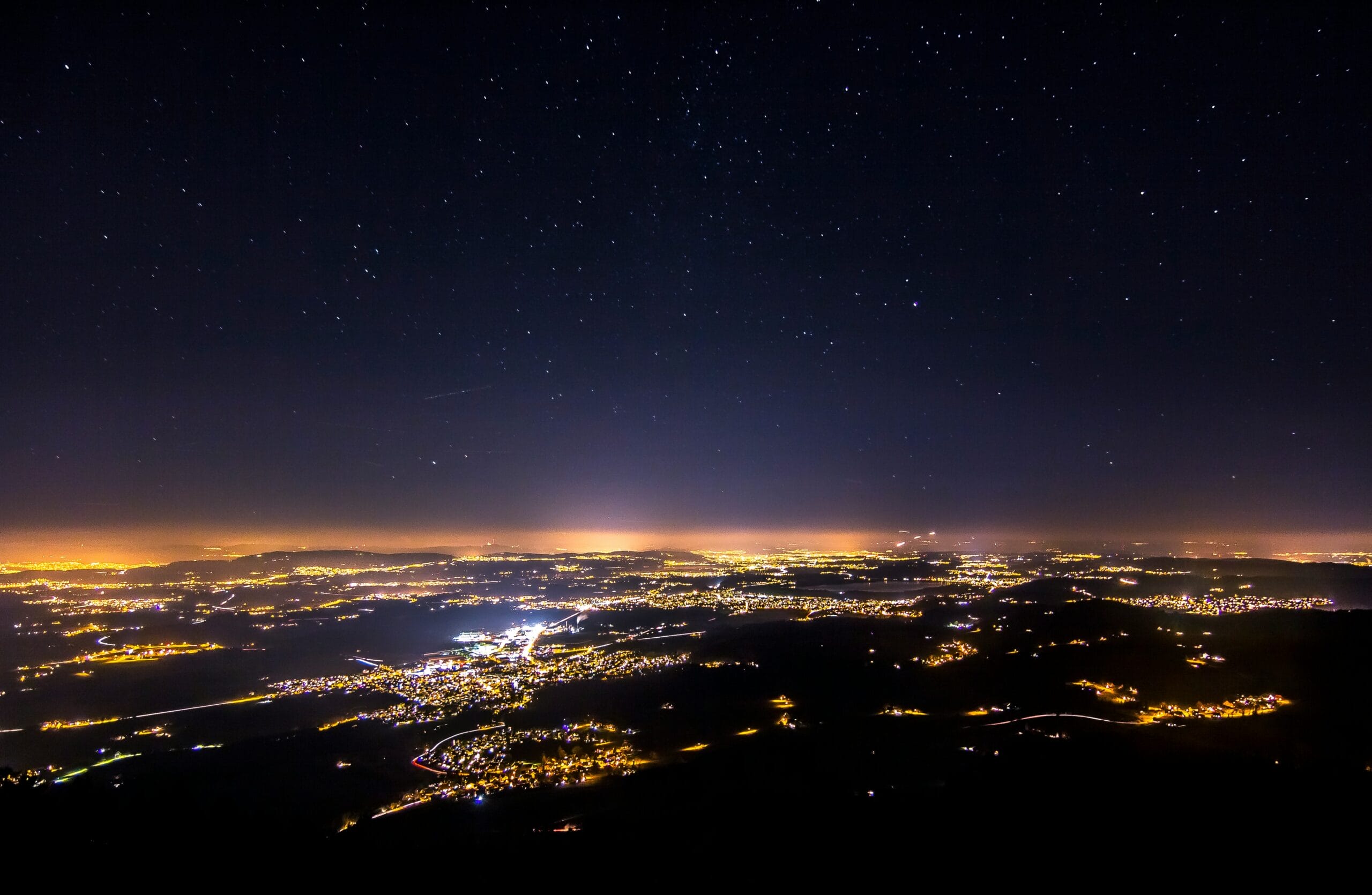
The night sky has been a source of awe and wonder for human beings since time immemorial, but our species has in many ways lost its collective adjustment to the dark. Experiencing darkness that hasn’t been diluted by artificial light is rare. More than 80 percent of the world’s population, and 99 percent of the population of the United States, now lives beneath light-polluted skies. What do we lose access to when the lights are always on? Having spent this time immersed in the expansive night, what might you carry forward into your days? What sensations of the dark might you want to return to?
This is an Emergence Magazine practice. It is reprinted here with permission.