The Ecology of Social Movements

Building Capacity for Collective Agency, Impact, and Resilience

Join Guhyapati, Braided Wisdom, Spirit Rock, and One Earth Sangha for this EcoDharma Exploration on Sunday, February 22, at 10:30am PT/1:30pm EST to 12:30pm PT/3:30pm EST. All are welcome. Learn more about this upcoming gathering in the description below.

For the rest of 2025, our EcoDharma Explorations will be co-created by Braided Wisdom and Spirit Rock as part of a new initiative, the EcoDharma & Transformational Culture Program. Look for more programming from this collaboration over the next few months and years. We at One Earth Sangha are honored and excited to work with our new partners.

Registration is now open.

© Joao from Unsplash

Social movements have played a crucial role in the evolution of our societies: resisting domination, struggling against forces of disempowerment, and striving to realise alternative projects that challenge the limitations of existing systems. These movements focus and channel purposive collective actions that can deeply transform our world and ourselves.

They are highly complex phenomena and learning about the ecology of social movements can help us to make good sense of how we can contribute to them effectively and think strategically about our own action in solidarity with life.

The ecology of movements (ESM) framework highlights the fact that in order to combat the interlocking systems of oppression we face today requires interconnected forms of resistance. Similarly, it assumes that the processes of social change are highly complex and necessitate a multiplicity of contributions, synergies and creativity. And, just as contributions are diverse, so too are the actors involved, assuming we want to build large scale movements for deeper change. Finally, the ESM approach can help us to recognise the advantages of redundancy, adaptability and resilience that come with diversity of practice and experimentation across our movements.

To help us to make sense of movement ecology, we’ll explore a series of interlocking frameworks, apply these to our own contexts, and reflect on where we understand ourselves and groups in relation to the wider movement ecologies around us.
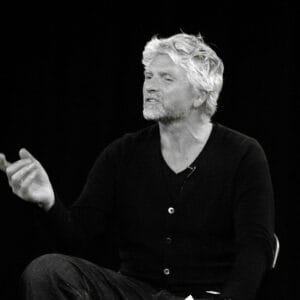
G (Guhyapati) has been working at the intersection of social activism, dharma, and ecological learning for 40 years. In the early 2000’s he founded the Ecodharma Centre where he pioneered training and retreats integrating contemplative practice, activism, and ecology. In 2017 he envisioned and founded the Ulex Project, building that into a collective project that provides training and capacity building support for social movements across Europe. He is known for highly innovative work blending pedagogical methodologies and innovating the approach known as Integral Activist Training. This holistic approach to activist learning has inspired numerous training initiatives across Europe. He currently steers the strategic development of the Ulex Project and its social movement capacity building programme and is devising a year-long Deeper Resources for Action programme, that seeks to harness radical dharma to empower socio-political activism.

     Pieces on One Earth Sangha

This Exploration is part of a short series in collaboration with Braided Wisdom, Spirit Rock’s ecoDharma & Transformational Culture Program and One Earth Sangha. We’re honored and excited to work with our new partners.


This program is donation-based, with no required registration fee. We welcome your contributions to support this program and the work of Braided Wisdom and One Earth Sangha.

Registration for this exploration is open now.

More EcoDharma Explorations

Upcoming

Restoring Yin Leadership in Our Communities and Movements

Recognizing the overly-yang tendencies of the dominant paradigm, we will explore receptivity and relational presence as we navigate The Great Unravelling. Only when we bring into balance the yin and yang can we cultivate movements that celebrate the living lineage of our planetary body.

Past

A Sanctuary for Spiritual and Queer Liberation

Learn about the House of Yin, a liberatory community-learning home for reflective and relationship-grounded practitioners who want to continue to fortify the Yin in themselves and their work in the world.

Past

The EcoSattva Journey

How might we not just be with the collectives troubles, but take them up on the invitation for collective transformation?