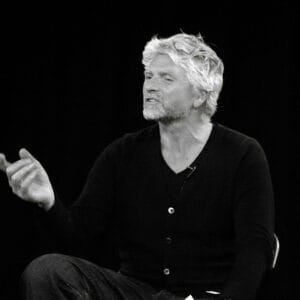
Nikayla: I wanted to start by asking about your name, because it’s such a beautiful one, and just saying it aloud, I can feel a weighted meaning. Where does “Guhyapati” come from?
Guhyapati: Well, I’ve had many names in my life. The name Guhyapati was given to me when I was ordained more than thirty years ago by my preceptor, Sona, in the Triratna Buddhist Order. It’s a Dharmachari ordination, which intentionally doesn’t make a distinction between monastic and lay practice. The idea is that we oughtn’t to understand Buddhist hierarchies based on this status. Whatever your life circumstances, whatever choices and responsibilities you take on, you can practice very effectively.
Ordination in this tradition isn’t a single event but a gradual unfolding. You spend years studying and being in community until your sangha can truly witness your “effective going for refuge.” Going for refuge to the Buddha, the Dharma, and the Sangha is an aspiration, but effective going for refuge implies you are able to continuously and ongoingly create the conditions in your life to sustain an effective transformative practice.
Ordination is a collective decision, and takes a group of people a while to be able to witness if you’re effectively going for refuge. Once that’s decided, there is an ordination retreat, and your preceptor, someone who really gets to know you over the years, decides your name.
You don’t know your ordained name until you’re sitting in an ordination stupa during a solo night of a multi-month, intensive retreat, at which point your ordination name is given to you. You don’t know the name before that moment.
For me, that name was Guhyapati. It’s Sanskrit. Guhya means something hidden, mysterious or esoteric, even a cave. Pati means lord or master, though I’d say that word unfortunately has a lot of patriarchal connotations. Together, it’s often translated as “Lord of Mysteries,” which is a title sometimes given to Vajradhara, the Buddha Shakyamuni in his Vajra form.
As activists today we have to become able to bring a deep sense of wisdom to our practice that enables us to commit ourselves to a struggle that is endless.
It’s a cool name, isn’t it? I like it. Still, I mostly go by “G.” When I came home from the ordination retreat, my children were small, and “Guhyapati” was a bit of a mouthful. “G” was easier for them, and it stuck.
I love the deep honoring of tradition and sense of continuity that comes with it, but out of context the name can seem superficially culturally appropriative, obfuscating rather than revealing the intention of the name. So, most of the time I just go by “G.”
Nikayla: Do you feel that having this name shaped your path onward from that ordination moment?
Guhyapati: No, not really. I think my path shaped the name. Sona knew me well by then. I was the sort of person who would get up before everyone else on retreat, sit for loads of extra hours in the morning, and skip lunch to meditate longer. I had this deep commitment to practice. I think he recognized that in me and found a name that fit.
I was really inspired by the life of Naropa, and he plays a really important role in the history of Vajrayana. The Vajrayana connection has always been very important to me, and I think they were aware of that at the time of giving me the name.
Nikayla: I want to turn to your work with the Ulex Project and the Ecodharma Centre. Both seem like living explorations of what a modern Bodhisattva path might look like. But first, I think it’s worth revisiting here, could you speak to the Bodhisattva ideal?
Guhyapati: Buddhism has always been an evolving tradition. There is no way of teaching that fits every circumstance. As history, social conditions, cultural contexts unfold and change, teachings have to adapt and respond to stay effective as methods that support us towards liberation. One of the first big historical shifts happened in the first century BCE. That emergence is what’s called the Mahayana.
The Mahayana is the Sanskrit word for, in the simplest translation, the “greater vehicle,” the big vehicle that can support and carry all beings towards liberation. The promoters of the Mahayana used the term Hinayana, meaning the “lesser vehicle,” which was intended as a pejorative term, to refer to other non-Mahayana Buddhist communities and practitioners. Their view was that some of these practitioners of Buddhism were getting a little bit stuck because they were becoming overly focused on Dharma practice as a vehicle towards a merely personal salvation. That focus on personal salvation can be methodologically problematic because you risk reinforcing your self-preoccupation, which is one of the key obstacles to liberation.
As a kind of antidote, the Mahayana suggests a method to free ourselves of self-preoccupation and turn our attention towards the wellbeing of not just ourselves, but all beings. The Bodhisattva was the kind of ideal Buddhist practitioner who is practicing not for their own benefit alone, but for the benefit of all beings; who is simultaneously dedicated to their own liberation and the liberation of all beings – to the inseparability of transforming self and world. Liberation here is understood as a realization of the inseparability of wisdom and compassion – or groundlessness and solidarity.
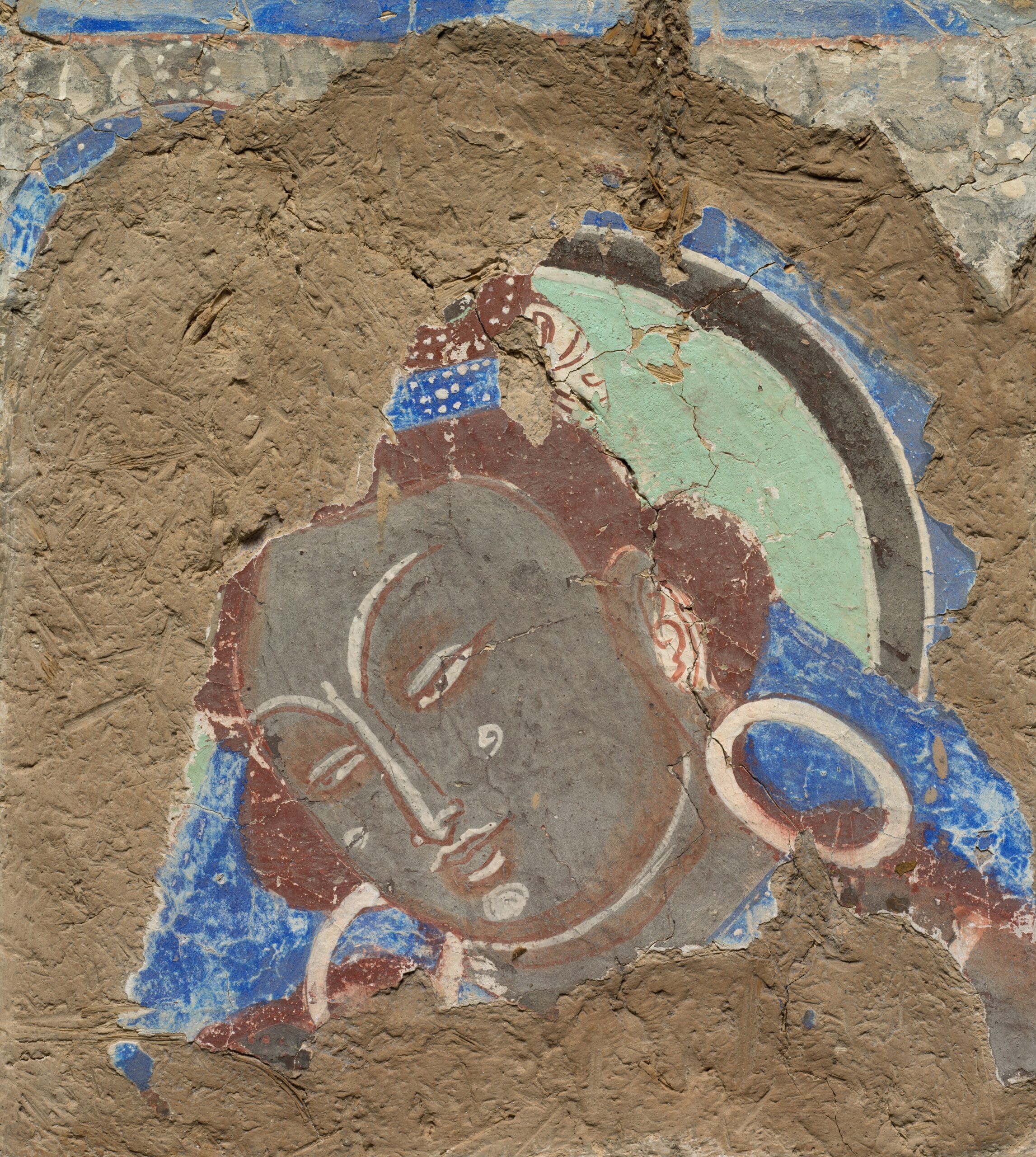
The Mahayana also offers an antidote to cosmological dualism, another obstacle to liberation. The Mahayanists were offering a corrective to a vision of liberation that was suggestive of leaving this world of samsara and transcending into a saved, somewhere else type nirvana. The Mahayana really tried to offer a vision of liberation as non-dualistic, right here in the midst of the world.
Nikayla: You’ve spoken about how the Bodhisattva ideal can serve as a kind of counterforce to our hyper-individualistic, capitalist culture. Could you say more about that?
Guhyapati: Buddhist practice is very much shaped by its context. If its context is a kind of neoliberal, hegemonic, social structure that tends towards the atomization and hyper-individualism, then that will shape to some extent the way people understand and practice Buddhism. I think the re-emphasis of the Bodhisattva, not just as something aspirational, but as something really put into practice through acting in solidarity with others, offers a corrective to tendencies in contemporary Buddhism that have been largely shaped by the neoliberal culture of the last few decades.
I think it’s also not just about aspiring to an abstract Bodhisattva ideal, but applying the Bodhisattva ideal as a strategic orientation in life given the specific historical conditions we’re living in today. You begin to ask yourself questions like, how am I going to best use my time and energy to create the conditions for the liberation of myself and others? How am I going to disentangle myself from the economic conditions that push me into atomisation and individualistic strategies for survival – and instead find other people with whom I can enter into committed relationships of solidarity and collaboration in shared projects for the benefit of people and the planet?
There is a way that this way of speaking about the Bodhisattva has already been reframed by a Western historical consciousness and sociological understanding. This contemporary view of the Bodhisattva is informed by political traditions that suggest we can take significant responsibility in reshaping the world. This view was not an explicit part of the Buddhist tradition historically, but I would argue that it is implicit and consistent with it.
So I think Ecodharma, as I understand it, is revitalizing or reframing the Bodhisattva as something informed by and yet different to the original figure.
Nikayla: Do you think there’s something unique about the conditions of our time that calls for the emergence of this different kind of Bodhisattva?
Guhyapati: It’s notoriously difficult to identify what’s unique about one’s own times, because, well, we’re in them. But clearly, on a longer timescale, the climate breakdown and trajectory of ecological destruction create conditions that are historically specific, and these conditions do ask something of us. In the shorter term, what really stands out is the hegemonic crisis of neoliberalism, the twilight of neoliberalism as it has been called, and the renewed contest for our future which it implies. A contest that currently seems to be being won by the far right.
In a certain sense perhaps there is nothing very unique here, in the sense that throughout history we find different interests in conflict, trying to establish power and giving rise to forms of oppression and exploitation again and again. But at the same time, wherever we find exploitation and oppression we find movements of resistance and visions of other ways of living.
For example, in Spain through the late 19th and early part of the 20th century, the forces of the far right and fascism were growing, while at the same time there was a very strong commitment within the anarcho-syndicalist tradition to the ideals of solidarity, to transforming the world, to creating conditions where people could flourish – because they had a sense of the extraordinary beauty of human potential. For me there’s a real resonance between the Bodhisattva and the practices of those Spanish anarchists. I see this same commitment in many of the activist groups the Ulex project supports today.
Nevertheless, something that really marks a big difference between the mass movements of the 19th and 20th centuries and activism today is a deep loss of ambition and sense of historical possibility. Our movements seem to be struggling with an inability to envision a future in which our movements can win. The mass movements of the 19th and 20th centuries contained a powerful motivating sense that they were going to radically change the world and could make it a much better place. They could find energy in an almost utopic sense, something millenarian even. The efforts of organisers were often underpinned by large scale strategies and a sense of possible historical pathways to a better world. This is something that we just don’t seem to have recourse to today.
Of course, climate breakdown and ecological damage is a big part of that – as is the way that authoritarian and far right movements have been making so much headway together with the emergence of tech-feudalism and renewed geopolitical destabilisation. But so too is a recognition (conscious or not) of what can be called the historical failure of the Left. We’ve lived through a lot of failures of leftist social movements. Even our victories are riddled with terrible compromises and co-option, which makes it very hard for activists to engage today with that old kind of inspired idealism or hope for the future. I think there is also a kind of increasing sense of being latecomers, of witnessing many decades of capitalism and powerful interests morphing and adapting to repeated crises. Power can seem so much more consolidated now – which, while in part true, is in many ways a false sense that helps to consolidate power!
These enormous and compounded historical challenges do call for renewed approaches to activism and movement building that I believe can be enhanced by the Bodhisattva Ideal and some of the wisdom perspectives it can help us to foster.
The Bodhisattva approach enables us to find and sustain a powerful motivation that is beyond both hope and hopelessness.
As activists today we have to become able to bring a deep sense of wisdom to our practice that enables us to commit ourselves to a struggle that is endless. Traditionally the Bodhisattva vows to commit to work for the liberation of all sentient beings who, tradition states, are limitless in number. There is simply no end to that is there? There will never be an end. Cultivating a Bodhisattva attitude and insight can sustain our socio-political work despite the fact that whatever we achieve, it will be compromised and partial at best. Whatever we construct, it will be subject to decay. Our victories will give rise to our failures. Our social and cultural achievements can be beautiful and yet they’ll break down. This is the nature of history. This is impermanence. Nothing lasts.
Antonio Gramsci (the Italian political philosopher who died in a fascist prison in the late 1930’s) referred to ‘the pessimism of the intellect and the optimism of the will’, and his insights have helped many of us to continue to commit to actions of solidarity even when it has felt like we are struggling against the odds. But the Bodhisattva approach goes further than that in enabling us to find and sustain a powerful motivation that is beyond both hope and hopelessness.
Our struggle may be endless, and yet creating the conditions for compassion, and working towards liberation is absolutely worth doing. Even if we fail, when we fail, there is a revolution in the work itself. That requires a Bodhisattva kind of spirit.
Nikayla: The Bodhisattva as a character whose revolutionary means, are in fact the revolution?
Guhyapati: Yes. When we’re working with people who are in burnout, one of the things that becomes obvious is the toll of this simple goal-oriented approach to activism. It’s usually the case that our victories are partial, there is always more to be achieved, and this cycle burns people out. One of the correctives that has often been suggested is to “enjoy your actions for their own sake,” but I don’t think this is the right attitude either. If we want our actions to be beneficial we need to be strategic and able to evaluate our actions in relation to outcomes. The Bodhisattva approach involves being able to both enjoy action for its own sake and simultaneously evaluating it in relation to the impacts we seek to achieve.
I think that to benefit ourselves and others we need to have a sense of the liberatory possibilities of the future and to work carefully towards creating the conditions that enable us to realize that potential. I think there is real value in envisioning utopia, but holding that this utopia isn’t merely a future possibility, but is something continually unfolding in the present. Take post-capitalism for example. There are already spaces in our life that are post-capitalist and when we notice them they nourish our radical imagination. We can work to expand and scale those spaces, whatever the historical conditions we face, and those efforts create new conditions that shape the future.
So I don’t think we need to abandon visions of the future, but I think we do need to let go of the idea of an ultimate point of salvation within historical terms. From a Bodhisattva point of view, liberation doesn’t happen in the future. Liberation happens now. Liberation unfolds in the ways that we choose to engage in the ongoing, never-ending, struggle for liberation, in the ways we welcome others into the practice of that struggle, and in the ways we create the conditions for all of us to realize the qualities of compassion and wisdom within ourselves and between us.
Nikayla: In reflecting on the teachings on Bodhisattva and what they really might mean if applied to one’s engagement in social and political transformation, I feel like there is a real messiness to the path that is often understated.
Guhyapati: Yes, I think there is the potential for the Bodhisattva to become quite simplified without offering us an understanding of the messy complexity of the path. I think it’s important to find ways to relate to the Bodhisattva aspiration that do not create unhelpful expectations for ourselves. We have to hold a deep, kind regard for ourselves, an acknowledgement of our human limitations and conditioned nature. And this deep, kind regard also must be in creative tension with the sense of our potential as well.
But I think the real messiness of the Bodhisattva path comes when we are with others. For me, the Bodhisattva practice must be done with other people. Of course there are ways to work alone, but through working with others, you begin to multiply the impacts. When you work closely and collaborate with others, you get the chance to see yourself reflected back more deeply. This is inevitably messy.
In the Ulex Project we use a framework that we call the transformative group. We identify the ideals such a group is striving for at both the collective and individual levels. At the collective level we name that ideal as the free association of individuals. On the individual level that ideal becomes the deeply interconnected individual – psychologically, socially, and ecologically. We also recognise the obstacles that hold us back from realising those ideals – again at both the group and individual levels, things like hyper-individualism, self-preoccupation, othering tendencies and group demand for conformity, and so on.
The transformative group sits in the middle, between those obstacles and the ideals. A transformative group is trying to create the conditions for transforming both the self and the collective towards the ideals, and that is inevitably messy. We continually fail. We let each other down. Over and over again. And we make it very clear in sharing the framework that that messiness and repeated failure is a characteristic of the transformative group!
And yet the transformative group is an essential context for both self and collective transformation. So we need to develop our capacity to continue to bring kindness and forgiveness – while being strategic and organised to keep putting in place the conditions necessary to support our growth and transformation. It’s important to be living in the creative tension between what has shaped us until now and the potential beyond those limitations as well.
Nikayla: When you speak, I hear such a true believer in the power and potential of human beings. Of us! This makes me especially curious to hear Guhyapati’s vision of the future.
Guhyapati: We live amidst so much uncertainty. With so much complexity making it so hard to predict, I think we can often find ourselves either giving up in the face of uncertainty or seeking some kind of solace in over simplification. To try to help us avoid either of these, when we have done strategic visioning for the Ecodharma and Ulex projects we apply scenario planning tools. There was a book published by David Holmgren on a permaculture-informed approach to thinking about different possible futures. It acknowledges the fact that there are so many variables over the next 50, 100 years. Holmgren created a grid with what he saw at the time as two key variables: on one axis he placed peak oil arriving on a scale from early to late, and on the other axis he placed climate chaos on a scale of rapid or slow. You end up with four scenarios (Green Tech, Brown Tech, Stewardship, and Lifeboat scenarios). We use this model with a number of different variables for a number of different scenarios. We use these models to think and plan strategically so we’re able to adapt to a wide range of future scenarios.
So I live with a wide range of visions of the future that I try to stay alive to simultaneously, ranging from a sense of social orders that cherish and nurture our potential through to some quite dystopic possibilities. Although there is this kind of great uncertainty in our times, this doesn’t mean that we cannot make some useful sense of the ways our actions and choices can interact with and shape future conditions. But I think it is important to stay alive to a multiplicity of possible futures.
Right now I am coming across so many people in social movements who are assuming the inevitability of collapse. They often argue that they are being realistic, but even that kind of certainty about the future represents a kind of fantasising and can be very unhelpful.
Nikayla: There are moments I count myself among them.
Guhyapati: The vision of total collapse is deeply horrific, in terms of the impact on people and species and so on. Nevertheless, I have the sense that maybe what’s going on here is that this vision lets people off the hook. Assuming collapse lets us abnegate responsibility. If it’s all going to inevitably collapse, I’m free of actually having to try and bring about some other future. Assuming collapse allows for a simplification of the complexity of a very harsh uncertainty.
We’re not just victims of the conditions of our times. Yes, they shape us, but we can shape them back.
This isn’t to say collapse isn’t possible. Maybe it’s even likely. In some places it is already happening! But other scenarios remain in the realm of possibility, and in my view, are still very much worth fighting for. I think we need to be doing more to counter the narratives of collapse. Mark Fisher said, “capitalism seamlessly occupies the horizon of the thinkable.” In some ways, it’s in the interest of the capitalist system if we lose hope and forgo the radical imagination. In assuming collapse, we don’t just forsake the future, but we also damage the vision of who and what we are and can be.
So many of us have internalized the view that we are homo-economicus, that we are fundamentally driven by self-interest and competition, and we only do things for selfish reasons. It is one of the powerful achievements of neoliberalism to have so deeply entrenched in so many people such a partial view of human nature. That view of humanity is so deeply damaging. We need to have a different vision of who we really are – one that acknowledges that we are shaped by conditions and that we can take significant responsibility for shaping those conditions and therefore who we can become.
This brings us back to the Bodhisattva. In committing our lives to benefit others, we have to work hard together to create the social and material conditions that enable people to flourish. That means nurturing the relationships, creating the communities, and building the organisations and societies that help us each to recognise the liberating power of living in solidarity, that help us learn and cultivate compassion and kindness. The fact that we can witness the ways that certain social and material conditions liberate that potential between us, as a lived reality, offers a vision of the future that sustains throughout all those other big, historical social scenarios.
We’re not just victims of the conditions of our times. Yes, they shape us, but we can shape them back, especially if we commit to doing that together.
Nikayla: What would you like to leave us with?
Guhyapati: There is a quote from Dilgo Khyentse Rinpoche that I’ve carried for years that expresses for me how the Bodhisattva ideal can guide and resource us in these times: “When we realize the empty nature, the energy to benefit others dawns, effortless and uncontrived.”