
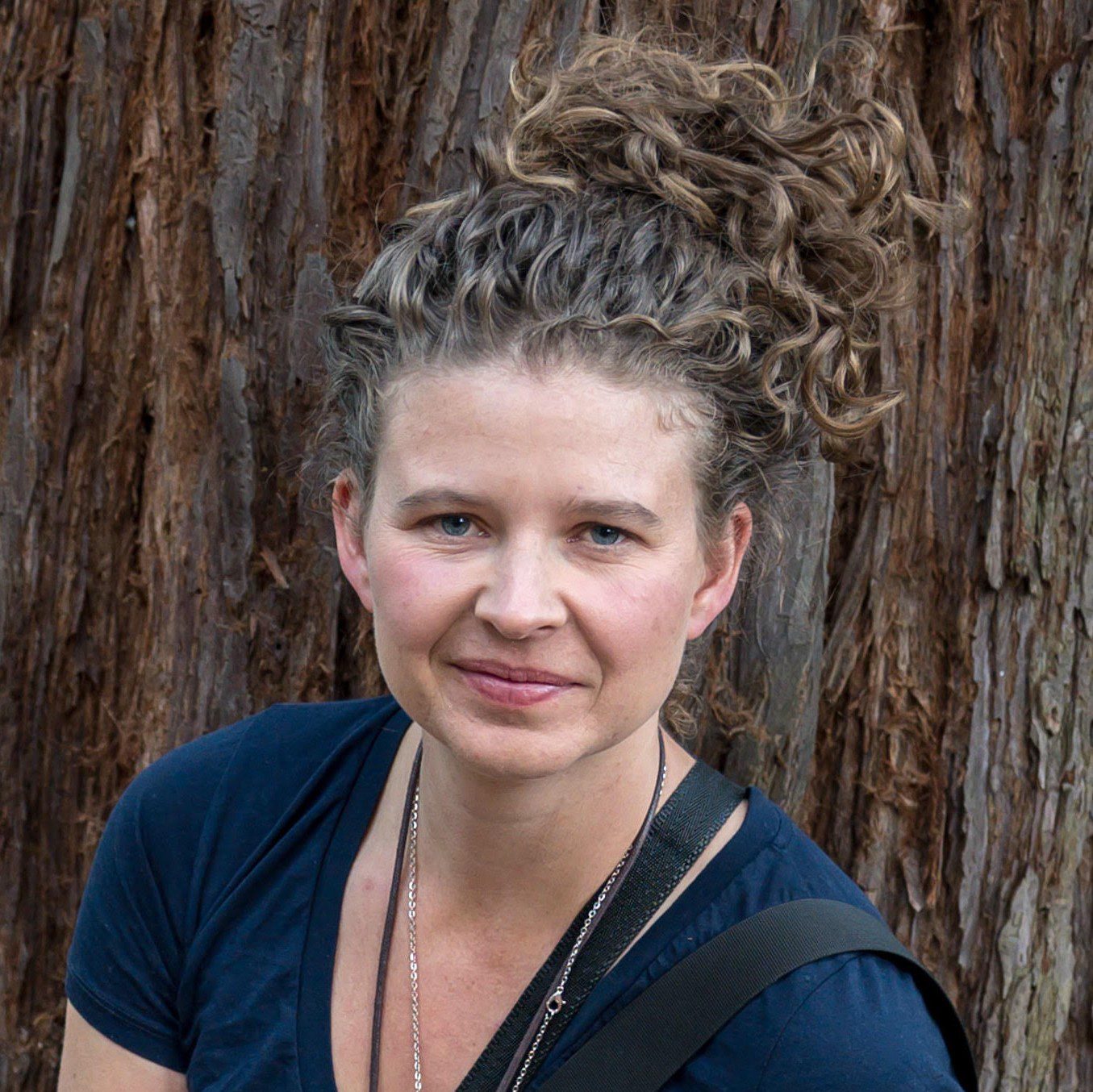

©Annie Spratt from Unsplash


The News

Each morning we listen for what is breaking—

the sound of a thousand tragedies fills the air,
shattering that never stops,
headlines, a fleet of anchors tangled at our feet.

We watch, worried
if we turn away even for an instant,
it will all crumble the rest of the way.

Forget with me for a moment.
Take an unguarded breath.
Do it now, the world needs your attention here, too,
on the rise and fall of your shoulders,
the rustle of leaves outside the window,
the warm space between your gaze and mine.

The News originally appeared in What We Were Born For, published by Blue Light Press in 2021. It is reprinted here with permission.

Emilie Lygren is a poet, naturalist, and outdoor educator whose work emerges from the intersections between scientific observation and poetic wonder. Her first book of poetry, What We Were Born For, was chosen by the Young People’s Poet Laureate as the February 2022 Book Pick for the Poetry Foundation. She lives in California, where she wonders about oaks and teaches poetry in local classrooms. Her website is emilielygren.com.

     Pieces on One Earth Sangha
facebook
twitter
email

Related

EcoDharma
EcoDharma
Lou and Kristin explore the integration of Buddhist practice with climate action through the lens of the “quivering heart” — the capacity to hold climate grief, fear, and uncertainty with tenderness and courage.
EcoDharma
EcoDharma

Replacing the “Behavior Change” Playbook

For decades, climate and environmental advocates have tried to close the gap between what people know and what they do. Frustrated, our answer has been “more”: more information, more urgency, more compelling imagery. But what if the problem is our misunderstanding of the problem?
EcoDharma
EcoDharma

You Don’t Have to Carry This Alone

Situated somewhere between profession and spiritual practice, eco-chaplaincy is an emerging field rooted in contemplative traditions that is responding to the suffering arising from ecological crises. The handful of eco-chaplaincy programs, still small, signal a shift in how we understand care.

Leave a Reply

Your email address will not be published. Required fields are marked *

This site uses Akismet to reduce spam. Learn how your comment data is processed.