
As anyone who has spent time in nature knows, one of the joys (and sometimes frustrations!) is the reminder that we aren’t in control.
One night on a recent meditation-backpacking retreat we hosted through Impermanent Sangha, a wild storm moved in as we slept. Wind gusts shook tents, rain became extreme, and the dry wash nearby flashed into a raging maelstrom. The next morning we got out of our tents into heavy rain, and the sounds of rocks booming in the creek. We sat in a circle meditating, under ponchos and rain suits. At the end of the sit, one of us said, “It’s another beautiful day on planet Earth”. Everyone cracked up. Everything was wet, inside and out, resistance was futile, and surrender to discomfort was the only option. It was an awesome experience. Late in the afternoon the sun came out, and that was wonderful too. The intense storm had deepened our practice and bonded the group. Likely no one there has forgotten it.
Deep practice in nature can help us grow into a stronger and more connected place from which to deal with the world today. The ecological and climate crises we face now go far beyond the ordinary personal suffering that Buddhism has usually been concerned with. Traditional Buddhist teachings help us to wake up individually and experience our non-separation from the world. Today we must ask whether those teachings also apply to group delusions of a collective self. Isn’t our ecological predicament a larger version of the perennial individual predicament: the notion that we the human “inside” are separate from the natural world “outside”?
Animals become friends and teachers; inner and outer boundaries get fuzzy.
The practical issue then becomes whether we can use our spiritual practice to investigate the root causes of our present situation. On one level we have a civilization that has institutionalized greed and exploitation, deferring the environmental costs of fossil fuels and the unrestrained growth of population and consumption to the future – a future that is starting to be now. On another level, we have human hearts and minds that have difficulty restraining the drive for immediate gratification and pleasure, regardless of the harmful consequences to ourselves and to others.
A powerful avenue for investigating our personal and collective separation is being in the natural world for periods of intensive practice. With time and deep, mindful observation we can realize that in order to live in non-separation we must give up the illusion of being above or beyond nature—the illusion of control that technology and society have so deeply ingrained in us.
Being in the elements, exposed and present, can be uplifting and inspiring, but it can also be scary, uncomfortable, and disorienting, before it is ultimately liberating. It is one thing to wax poetic about the beauty of nature, another to be deeply feeling moment by moment the effects on mind and body of cold, heat, wind, water, sun, solitude, and the fears they can engender. Yet if we turn towards our experience with loving awareness, it can bring us back to our true home, opening us to absolute truth and love; and helping us realize our deep connection and oneness with all.
Since the natural world is unable to protect itself from our formidable technologies, the ultimate question is if and when we will realize our non-duality with it, to love it and be loved by it, and in that way come to embrace responsibility for the well-being of the whole biosphere, which is our only assured path of survival.
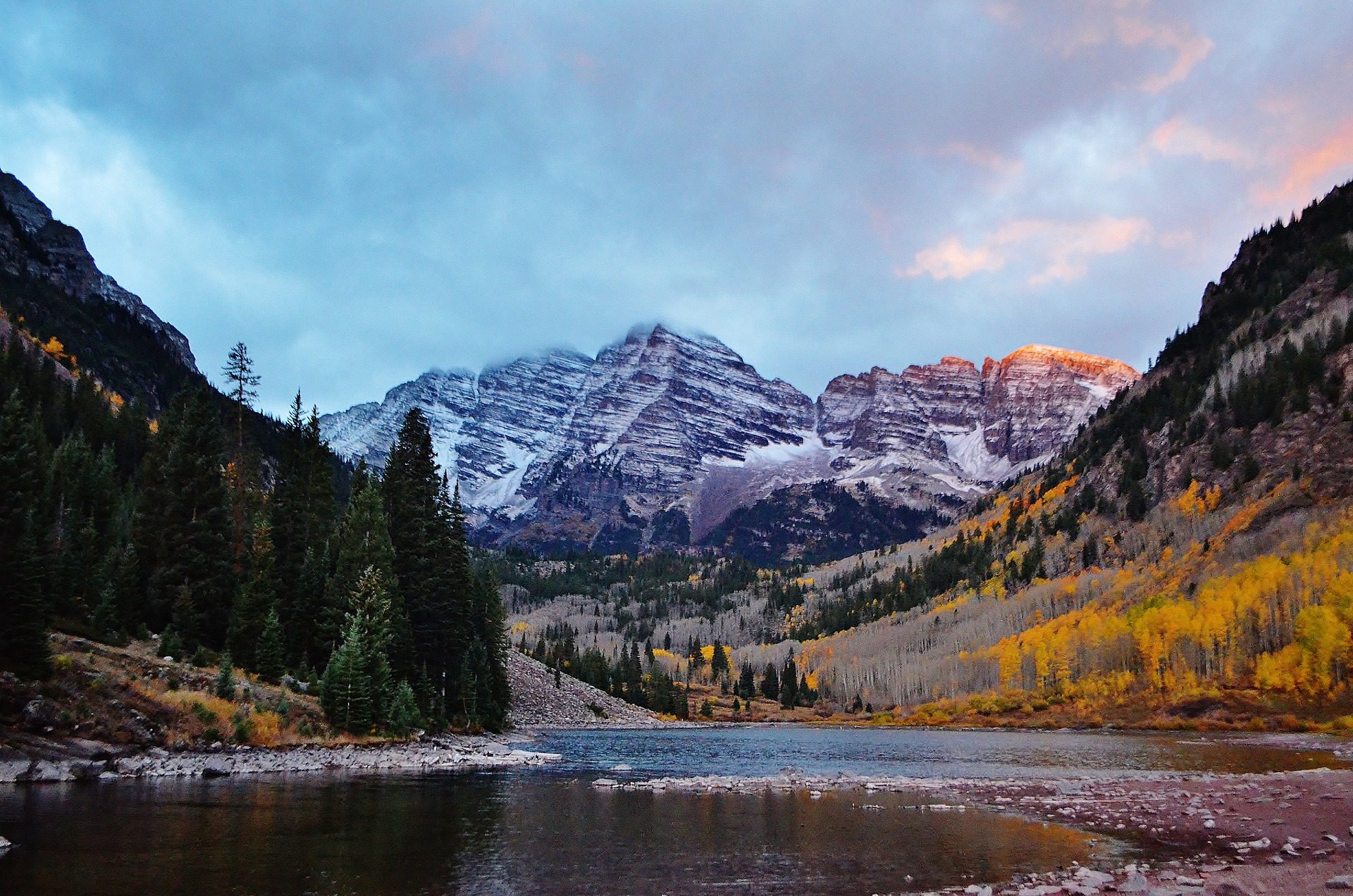
Impermanent Sangha has been offering wilderness and nature retreats for the past 15 years. During that time we have experienced the incredible connection to no-self, oneness and Sangha that results when people live and practice in nature, in silence, with intention and focus. We have seen daily tasks become expressions of love; animals become friends and teachers; inner and outer boundaries get fuzzy; and the sense of wonder and awe grow. Much of this happens not from strong effort, but as the participants’ natural response to advantageous (though not always pleasant) conditions.
This summer (July 22-31), Impermanent Sangha will be offering one of our Eco-Dharma retreats in a new way: We are building a retreat that brings together social and environmental activists who are not experienced in meditation with more experienced Dharma practitioners who have an interest in social change. We hope that this special form of an ‘impermanent sangha’ can help to promote new connections and relationships to support both the activist and Dharma communities.
If this sounds interesting to you and your practice, consider being part of the special impermanent sangha coming together this July where we will explore Eco-Dharma in a new way, in an amazing wilderness in Colorado. (See the One Earth Sangha event listing.) And feel free to contact Impermanent Sangha with any questions.