
Being the Earth

Rapture, Rupture, Regeneration

By 

From the Practice

Through our senses, the Earth can know itself, can see itself, hear itself, feel itself, smell itself, touch itself. So just feeling into what it feels like to know your body as a landscape, as a terrain of Earth.

… fast forwarding to recent times and the shifting, the decimating of the animals that roam through your grasslands, and the turning of those wild prairies and open spaces and valleys into agriculture, into rows of corn, rows of wheat. And your soil, the land, is beginning to be poisoned with chemicals and nitrates. As far as the eye can see, monocrops, few animals, few insects, sound of birds disappeared.

You notice that there’s pockets, people incredibly creative, finding ways to regenerate the coral reefs on old sunken boats and discarded metal, finding ways to keep the coral alive, to allow new coral to be birthed, pockets, small pockets, but still pockets of hope, of aliveness.

And then you come to a place like this, to a meeting like this. You connect with other people who are engaged, who care, who love the Earth, who are committed to doing something. Just like Greta, you no longer feel alone. You realize you’re part of a vast network. The Earth’s immune system that’s waking up to what we’re losing. That’s waking up to grief. That’s waking up to realizing we need to radically transform how we live.

Mark offered this practice at Spirit Rock Meditation Center. Find the transcript here: Being the Earth – Mark Coleman


Mark is an inner and outer explorer, who has devotedly studied mindfulness meditation practices for three decades. He is passionate about sharing the power of meditation and has taught mindfulness workshops and meditation retreats in six continents for the past twenty years. Mark is a senior meditation teacher at Spirit Rock Meditation Center and has taught there since 2000. Through his organization Awake in the Wild, he shares his passion for integrating meditation and nature.

     Pieces on One Earth Sangha
facebook
twitter
email

Related

Practice
Practice
A hurricane-ravaged landscape offers inspiration and a lesson on resilience to a photographer and student of the dharma.
EcoDharma
EcoDharma

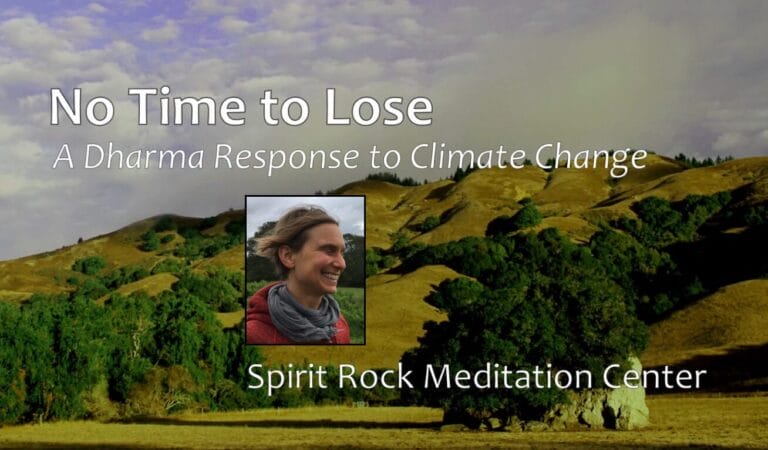
No Time to Lose

Young people are voicing grief about the loss of their world—and organizing to stop it. Kirsten Rudestam, a young dharma teacher herself, asks us to heed their calls.
EcoDharma
EcoDharma

In Service to a Suffering World

"The growing field of eco-chaplaincy reflects the increasing awareness that our care and attention must extend beyond the human.” The directors of a new Buddhist Eco-Chaplaincy Training Program at the Sati Center for Buddhist Studies aspire to cultivate the chaplains who bring compassionate response to all of nature.

Leave a Reply

Your email address will not be published. Required fields are marked *

This site uses Akismet to reduce spam. Learn how your comment data is processed.