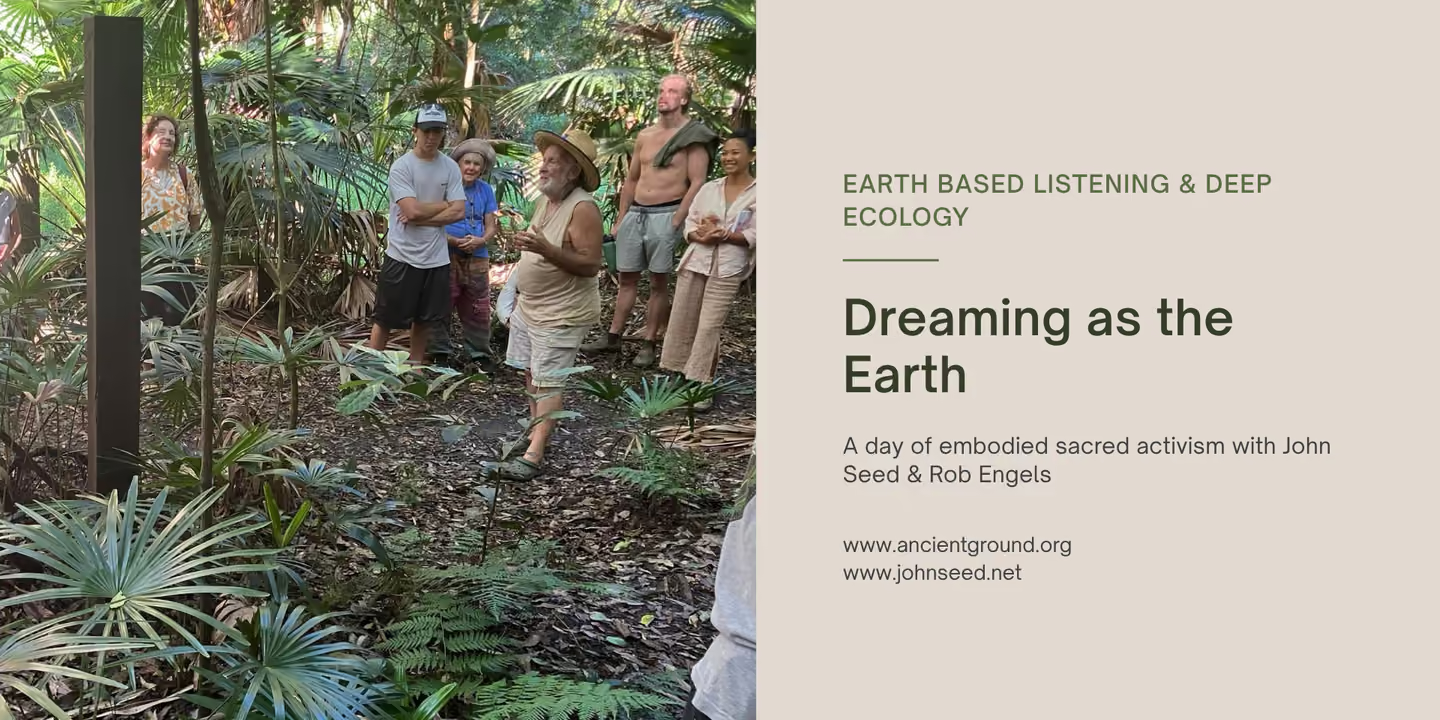
Dreaming as the Earth

Deep Ecology × Earth-Based Listening

event

Hosted by 

John Seed and Ancient Ground

From the Organizer:

We gather at the dawn of the sixth mass extinction — each of us carrying, somewhere in the body, both a great love for this Earth and a great grief for what is unravelling. Most of us carry a question, too: what is mine to do in times such as these? This day-long ceremony offers a living pathway into that question — through the body, through the land, and through a listening older than words. Together we will explore a way into embodied dialogue with the sentience of the more-than-human world and open a doorway for the wisdom of the earth to be known through us.

John Seed and Ancient Ground  is the host of this event. Please contact them with any questions.

Details

 Join this in-person event at

One Earth Sangha shares local and online events from around the world that express a Buddhist / mindfulness response to ecological crises.

If you would like to suggest an event for inclusion, send us an email.

More Events

A Four Part Series on Buddhist Eco-Chaplaincy (Panel 4)

Kaira Jewel Lingo and Fr. Adam Bucko join Rev. Chelsea MacMillan to explore interfaith spiritual care in response to the climate crisis. Register by Oct 26. Financial assistance deadline Oct 20.

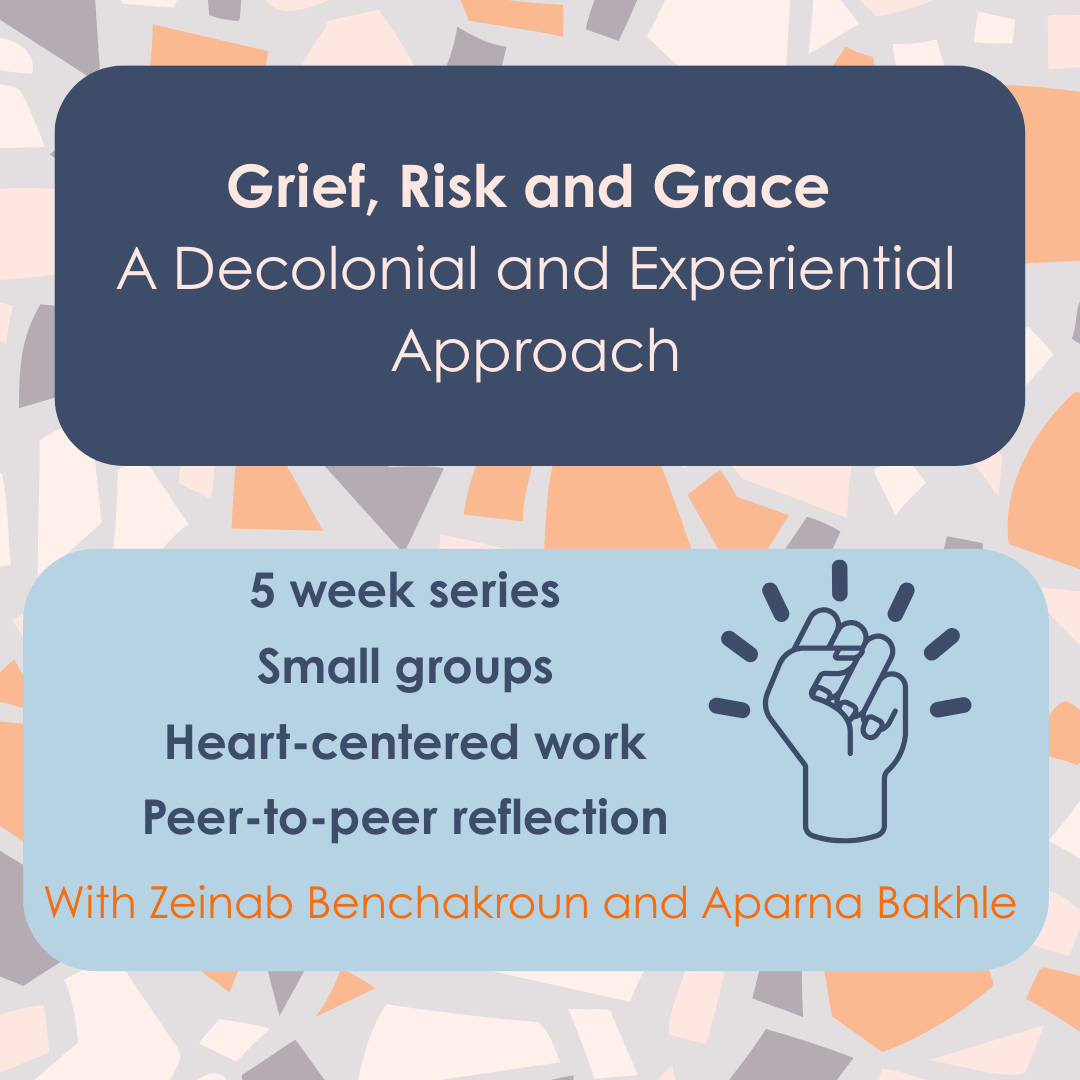
A Decolonial and Experiential Approach

While it may have been hiding under “rule of law” or “free market”, colonialism and supremacy function as the scaffolding of the industrial capitalist world. This series is an invitation to decolonize our mind, body, and heart. We will deepen our conscious and unconscious awareness of the systemic patterns of power. We will be working on how to avoid replicating tools of the dominant system, moving away from performative action and care, and centering underrepresented voices.

With Sean Oakes

In this five-week study series, we’ll explore the hypothesis that the monastic Saṅgha functions—in ancient India and today—as an active social intervention: offering genuine mobility and liberation to people otherwise locked into their conditions by birth. And we’ll turn that lens on our own communities: How do wealth, race, education, and class shape who gets to practice and lead today? How can we make this Dhamma we love more effective as a response to systemic oppression?