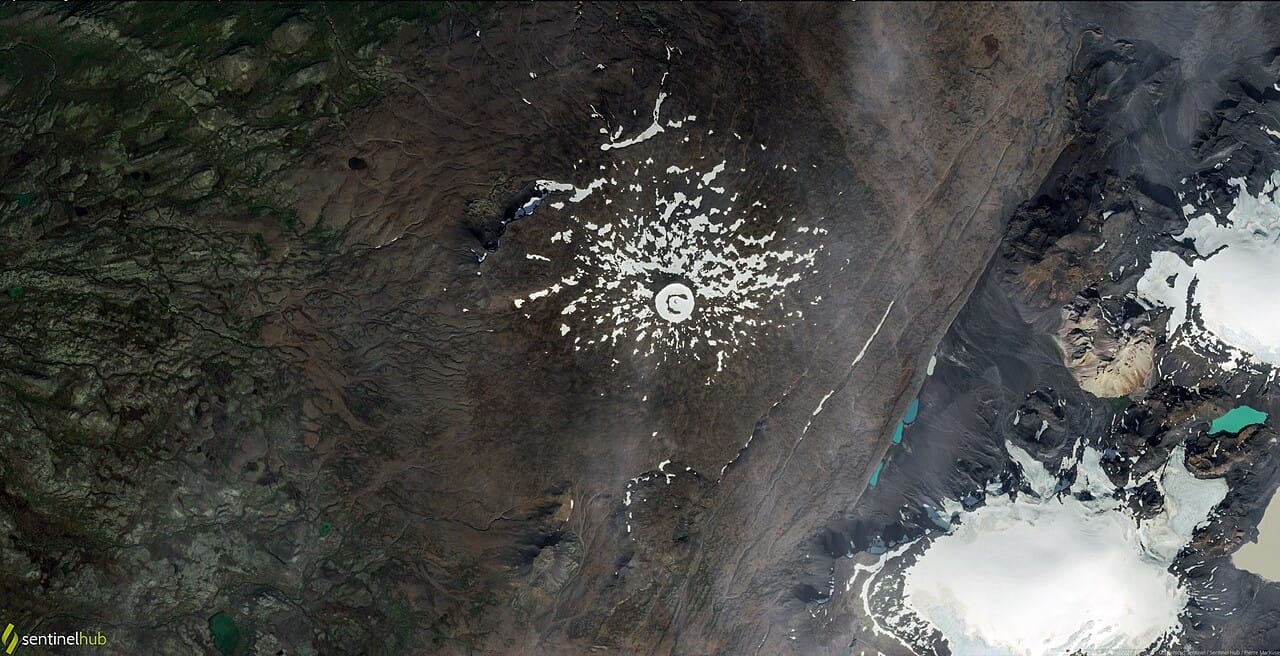
About the year 2000, a small and ancient, 700-year old glacier, in the remote country island of Iceland, died quietly. The glacier was named Ok, short for “Okjökull”, “jökull” the Icelandic word for glacier. Ok was the first of Iceland’s named glaciers to be killed by anthropogenic climate change, a warming planet.
Glaciologist Oddur Sigurðsson ventured to the top of Ok to confirm his suspicion that Ok glacier no longer had the mass to move under its own weight. Movement being one of the critical requirements for glacier status, Sigurðsson determined that Okjökull was no longer a glacier but instead was “only dead ice.” Iceland, commonly known as the land of ‘fire and ice,’ has over 400 glaciers, which collectively is losing 11 billion tons of ice a year.
Icelandic writer Andri Snær Magnason, an ardent environmentalist, noted that what used to be geological time is becoming human time; we can now watch natural beings, such as glaciers that took centuries to form, disappear in just a few decades — easily within a human lifetime. His observations and the impact of Ok’s demise on the local Icelandic community gave rise to the world’s first memorial service for a glacier.
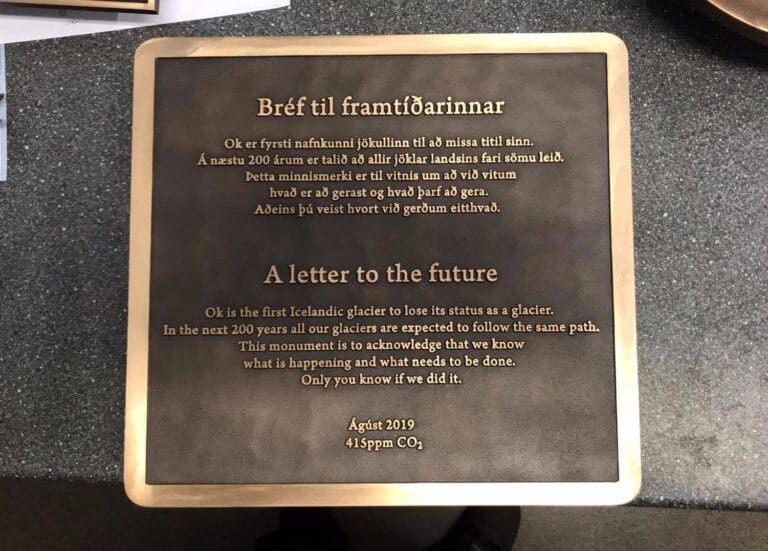
It was a cold day when a group of mourners gathered to climb Ok and lay a plaque at the top. Glaciologist Oddur Sigurðsson produced a death certificate from his backpack that he had submitted to the authorities. The cause of death, he announces, is “excessive heat” and “humans.” There is grief, sadness, and mourning, but mostly there is determination.
There are moments when the world asks something different of us. Not simply to work harder or solve bigger problems, but to remember who we are, what we belong to, and how deeply our lives are connected, to live with determination, and to pre-figure a better world, foster a brighter legacy. We are living in one of those moments now.
Perhaps our deepest transformation comes not from walling ourselves off from suffering, from grief, but to stop, to look, and listen deeply to what the suffering might be telling us.
Daily, we are reminded of uncertainty and vulnerability. Wildfires, floods, war, genocide, displacement, political division, loneliness and isolation, racism, tribalism, homophobia, transphobia, loss of meaning and purpose, extractive capitalism, addiction to fossil fuels, all form a tangled web of the metacrisis or polycrisis we now face. Yet what if all of these are different expressions of the same underlying condition, the pervasive belief that we are separate from one another and from the Earth?
In May, I launched a series of teaching engagements, traveling to places I love. I began in British Columbia, and weeks later, fires ensued. I went back home to Pennsylvania and the air was thick with smoke from wildfires in Ontario. I then went to Bordeaux, France for the historic sixth anniversary of the Order of Interbeing in Plum Village, France, arriving during an oppressive heat dome with temperatures exceeding 35 C; then raging wildfires ensued. Finally, I traveled to Santa Fe, New Mexico, to lead a retreat, and again, was met with smoke from wildfires. I realized that we as a human society may not be at the end of the world but we are at the end of a way of knowing the world. This was a moment of solastaglia, a deep longing mixed with grief, sadness, helplessness, and disorientation, witnessing in real time the devastation of places that previously felt safe and familiar. The proximity to suffering with and on the land is unmistakable.
Grief work is soul work and perhaps one of the most important actions we can take to give expression to what we love, and what we care about. There is a good reason many of us are feeling grief, uncertainty, and overwhelm in a warming planet. You may be asking yourself, How do I hold grief as a spiritual practice? How do I resource myself in the midst of grief? How do I re-engage even more committed to support a morally and socially just world, to take action on issues I care about and yet not become overwhelmed and paralysed by the magnitude of the crisis?
Our capacity to hold and to be present to grief is a spiritual power and among the greatest forces for healing and transformation individually and societally. Culturally, here in the United States, we are a grief adverse society. We avoid grief with its range of emotional tones: fear, avoidance, anxiety, and stuckness. Yet perhaps more than anything grief requires our tending, taking good care, as we would a beautiful garden.
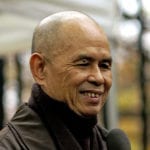
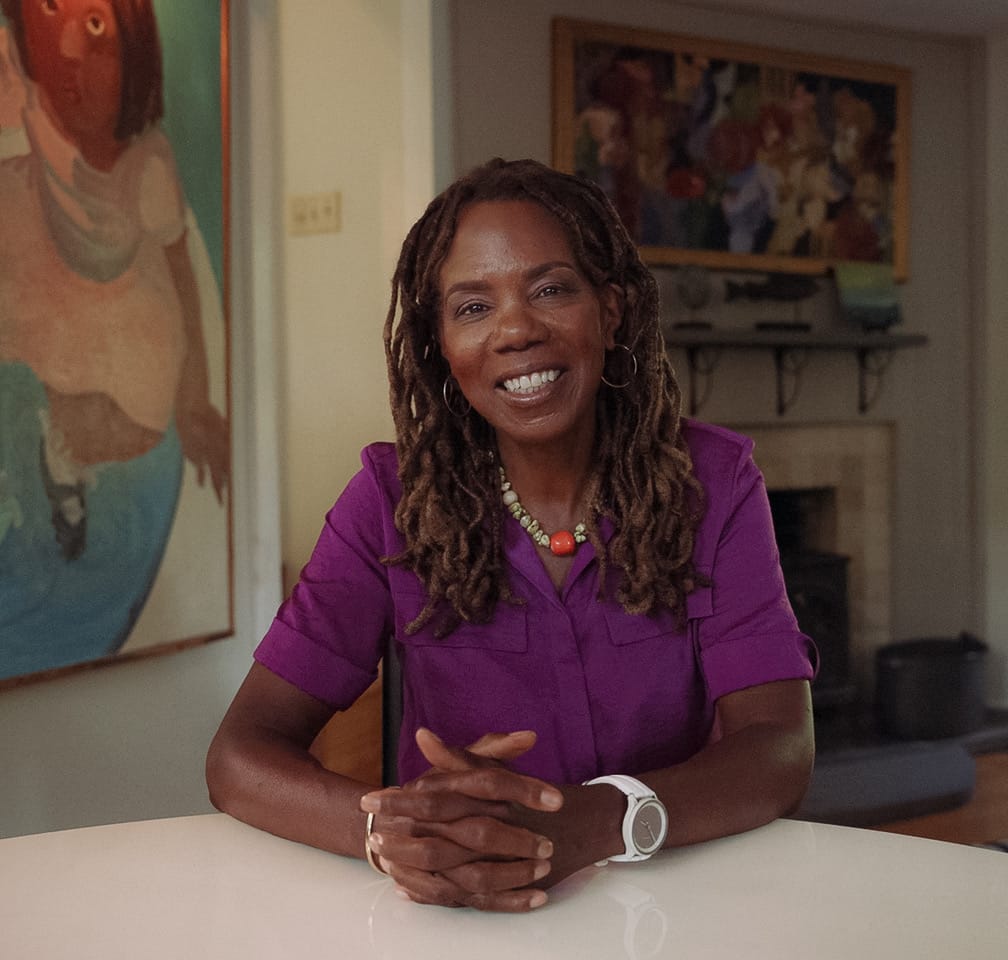
This October marks the 100th birthday of Thích Nhất Hạnh and in this essay, I will explore his and the Plum Village’s teaching on how to handle grief and suffering.
Thích Nhất Hạnh & Plum Village Teachings on Grief
Perhaps our deepest transformation comes not from walling ourselves off from suffering, from grief, but to stop, to look, and listen deeply to what the suffering might be telling us. Listening in this way can open us to new insight about what we truly care about, what we love and what we are willing to protect and defend. Thích Nhất Hạnh often advised practicing shamata, stopping, stopping running, stopping ruminating thoughts to be here and now with things as they are. In this practice, we calm the body by releasing tension and settle the nervous system with the breath. We bring a quality of physical ease to the mind and body rather than amplifying pain as a way to support ourselves and our strong emotions. We embrace the tension, pain, and suffering as a mother would embrace a crying baby. We invite the energy of mindfulness, concentration, and insight to recognize what’s happening in our body and mind and we breathe and feel, releasing tension gently, generating calm and a sense of understanding. This is counterintuitive to the dominant culture which habitually and unconsciously avoids tension, pain, and discomfort.
This stopping asks us to have a steady and a tender heart. This takes immense spiritual and emotional maturity and resources to remain open and responsive in the face of profound suffering. This requires doubling down, to stop and stay when the strong impulse is to turn away. When we stop, we train ourselves to notice patterns with compassion. Paired with stopping is the practice of vipassana, looking deeply to understand. Stopping, staying, and looking deeply supports letting the reality of suffering be felt without hardening, denying, collapsing, bypassing, gas lighting, or reaching for premature answers rooted in distress.
Thích Nhất Hạnh wrote about the power of understanding and handling grief through the Four Noble Truths: suffering, the causes of suffering, the cessation of suffering, and the path that leads to the cessation of suffering. Focusing on the the Third Noble Truth, he described three ‘turnings’ that support the cessation of suffering. The first turning of the Third Noble Truth is the recognition of the possibility of the absence and the presence of peace. He said, even if in the moment we lack peace and ease, we may recall a time when we felt peace and ease, and in that way we can see that peace is possible even if in the moment it is not present. The second turning he described is encouragement. In other words to find ease and well being within ourselves, we need to actively practice well being by cultivating time for recovery and resilience, such as being in nature, spending time with loved ones, or resting. Even elite athletes know that recovery is integral to their performance. This encouragement is an antidote to the sense of drivenness and urgency that are so inherent when we deeply care. The third turning of the Third Noble Truth is realization that suffering and happiness are interdependent and interconnected.
Thích Nhất Hạnh described this truth as interbeing, the understanding that nothing exists independently. A cloud becomes rain. Rain nourishes the soil. The soil grows the food that sustains us. Trees produce the oxygen we breathe, and our breath nourishes the trees in return. When we truly understand this, the boundaries between self and other begin to dissolve.
A heart willing to remain open, even in loss, becomes capable of extraordinary courage.
Yet modern life often teaches the opposite. We celebrate independence over interdependence, competition over cooperation, and consumption over stewardship. These values have shaped not only our institutions but also our relationship with one another and with the natural world. If separation has contributed to today’s crises, perhaps remembering our interconnectedness is part of the healing.
Joanna Macy reminds us that the heart that breaks open can hold the whole world. Grief, then, is not the opposite of hope. It is often where hope grounded in skillfulness begins. A heart willing to remain open, even in loss, becomes capable of extraordinary courage.
Grief work is heart work because it takes us into vulnerability, one of the most gorgeous aspects of our humanity. It is a form of heart activism and open heartedness. Grief work is soul work because it exposes the truth of our needs. Grief, at its core, is subversive in a culture that inclines us toward disconnection, dehumanization, and polarization.
The future is shaped not only by governments or institutions but also by the countless choices we make every day—how we speak, how we listen, how we care for one another, and how we care for the Earth and ourselves. These seemingly ordinary moments become the foundation of culture and for the legacy we create.
The mourners that cold day at the funeral for Ok, the tiny glacier, were sad, they were grieving, and they were determined to create a world in which glaciers flourished. They were seeking to create a new love story for glaciers and for all beings. They understood that change cannot be done alone. They were united in their grief and in their determination.
Perhaps this is the deepest invitation: to remember that we belong to one another and to this living planet. Success becomes less about accumulation and more about contribution. Leadership becomes an act of service. Spiritual practice becomes less about escaping the world and more about engaging it with wisdom and compassion.
The challenges before us are immense, but so is our capacity to respond with courage and love. Every generation is called to meet the realities of its time. Ours is being called to rediscover what it means to live as if we truly belong to one another and to the Earth.
If we truly embraced the understanding that there is only One Earth, how might that transform the way we live, the way we lead, and the legacy we choose to leave for those who come after us?